
The Background:
After years of cooking for Atlanta families, we at Atlanta Personal Chef Service have learned that timing is everything when it comes to produce. Georgia’s climate gives us an incredibly long growing season, and knowing what’s at its peak each month completely changes how food tastes.
There’s a reason your grandmother’s tomato sandwich in July hits different than one in February. Or why Georgia peaches in summer are worth the hype while winter peaches from elsewhere fall flat. It’s not nostalgia—it’s biology. Produce picked at peak ripeness and sold within days tastes fundamentally different than produce picked early and shipped across the country.
At Atlanta Personal Chef Service, we plan menus around Georgia’s growing calendar because it’s the simplest way to make better food. When ingredients are at their best, you don’t need to do much to them.
This guide breaks down what’s actually growing in Georgia each month, when to buy it, and how to use it.
Why Seasonal Actually Matters in Georgia
Georgia’s climate is unique. We’re warm enough to grow summer crops like tomatoes and peaches, but we get enough cold weather for proper winter greens and apples. This means our seasonal calendar is packed!
Flavor is Different: Produce develops sugars and flavors as it ripens on the plant. When farmers can let strawberries ripen fully before picking because they’re only traveling 50 miles, not 2,000, the difference is massive. That’s why April strawberries from Georgia farms taste like candy compared to January strawberries from California.
Freshness is Measurable: A tomato loses about 30% of its vitamin C within 24 hours of being picked. Local produce sold within days of harvest simply has more nutrition than produce that’s been in transit for a week.
Economics Make Sense: When something is abundant locally, prices drop. Summer squash that costs $1 per pound in July costs $4 in January because it’s coming from Mexico or California. Same with strawberries, peaches, and greens.
Georgia Agriculture is Real: This state grows serious food. We’re second in the nation for pecans, top five for blueberries and peaches, and we grow more Vidalia onions than anywhere else because they literally can’t be grown anywhere else. Supporting that makes economic sense.
Spring in Georgia (March – May)
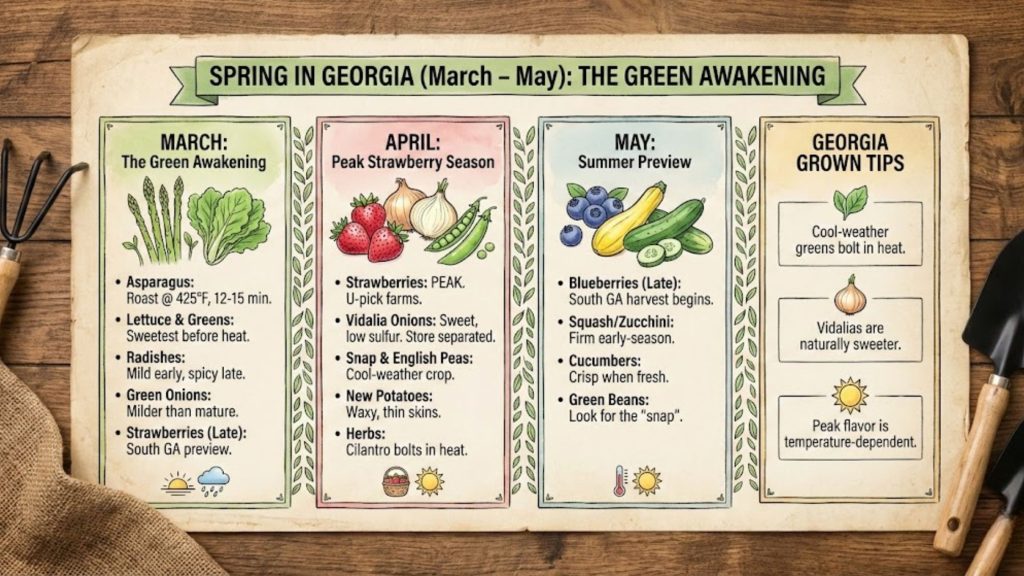
Spring in Georgia means everything starts growing at once. This is when farmers markets really come alive across Atlanta.
March: The Green Awakening
Asparagus – Georgia asparagus season is short but intense, usually starting in mid-March. Look for firm stalks with tight tips. Thinner stalks are actually more tender than thick ones, contrary to what people think. Roast it at 425°F for 12-15 minutes with olive oil and salt—that’s it.
Lettuce & Spring Greens – Baby lettuces, arugula, and spinach thrive in Georgia’s cool spring weather. These are the greens that bolt (go to seed) once it gets hot, so spring is when they’re sweetest and most tender.
Radishes – Radishes grow fast in cool weather. The spiciness you associate with radishes comes from compounds that increase as they mature—early-season radishes are milder and slightly sweet.
Green Onions – These are just regular onions harvested early before the bulb develops. They’re milder than mature onions and work well raw or quickly cooked.
Strawberries (Late March) – South Georgia strawberries start appearing in late March. This is early season, but it’s a preview of what April and May bring.
April: Peak Strawberry Season
Strawberries – This is it. Georgia strawberry season peaks in April and early May. The state has U-pick farms across North Georgia where you can pick your own. Early season berries (mid-April) are typically smaller and sweeter. Later season (late May) are larger but less sweet. For eating fresh, go early. For jam, go late.
Vidalia Onions – Georgia’s famous sweet onions come from a specific region where low sulfur soil produces exceptionally sweet onions. They’re harvested in April and May. Store them separated (not touching) in a cool, dry place, and they’ll last months. They’re genuinely sweeter than other onions—that’s not marketing.
Snap Peas & English Peas – Peas are a cool-weather crop that stops producing once temperatures hit the 80s consistently. April is peak season. Snap peas can be eaten whole; English peas need shelling but are worth it.
New Potatoes – These are just young potatoes harvested early. The skins are thin, the flesh is waxy, and they’re perfect for boiling or roasting whole.
Herbs – Cilantro, parsley, dill, and chives all thrive in April before the heat sets in. Once temperatures consistently hit 85°F+, cilantro bolts immediately.
May: Summer Preview
Blueberries (Late May) – South Georgia blueberry farms start harvesting in late May. Peak season runs through June. Georgia is one of the top blueberry-producing states.
Squash – Yellow squash and zucchini start producing in May. Early-season squash is firm and flavorful. By late summer, it gets watery and bland as plants mature.
Cucumbers – Georgia cucumbers start in May and run through September. The difference between a fresh cucumber and one that’s been refrigerated for two weeks is texture—fresh ones are crisp, old ones get rubbery.
Green Beans – Fresh green beans have a snap when you break them. That’s literal—if they bend instead of snapping, they’re old. May brings the first beans of the season.
Summer in Georgia (June – August)
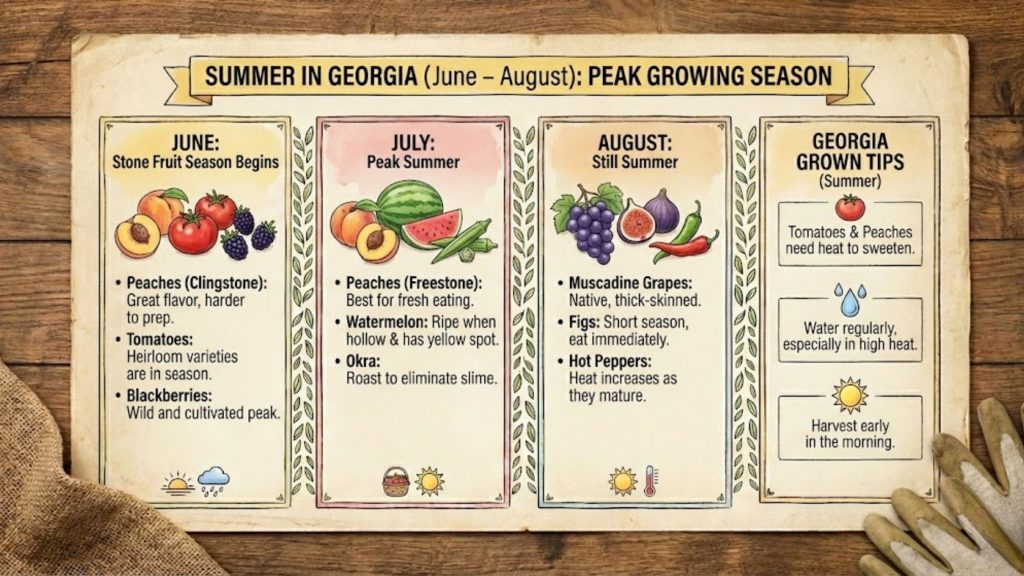
Georgia summers are hot and humid, which is exactly what tomatoes, peppers, and peaches love. This is peak growing season.
June: Stone Fruit Season Begins
Peaches – Georgia peach season starts in early June and runs through August, with different varieties ripening at different times. June brings clingstone varieties (flesh clings to the pit), while July brings freestone (flesh separates easily from the pit). For eating fresh, freestone is easier. Georgia is the “Peach State” for a reason—the clay soil and climate produce exceptional peaches.
Tomatoes – Tomato season in Georgia runs June through September, peaking in July and August. Heirloom varieties are in season now—Cherokee Purple, Brandywine, and others. These aren’t prettier or longer-lasting (they’re actually fragile and spoil quickly), but they taste significantly better than standard varieties.
Blackberries – Wild blackberries grow along roadsides and in fields across Georgia. Cultivated varieties are larger and sweeter. Peak season is June and early July.
Corn – Georgia sweet corn season runs mid-June through September. Fresh corn converts its sugars to starch quickly after picking, which is why farmers market corn tastes sweeter than grocery store corn—it was picked recently.
Bell Peppers – Peppers start producing in June and continue through first frost. Green peppers are unripe; red, yellow, and orange are fully ripe, which is why they’re sweeter and cost more (they take longer to grow).
July: Peak Summer
Peaches (Peak Season) – July is peak Georgia peach season. This is when you’ll find the best selection and prices. Freestone varieties are ideal for eating fresh, grilling, or making preserves.
Tomatoes (Peak Season) – July brings peak tomato season. A good tomato needs nothing more than salt. Duke’s mayonnaise on white bread with a thick slice of tomato and salt is an Atlanta summer staple for a reason—it showcases what a real tomato tastes like.
Watermelon – Georgia watermelons ripen throughout summer. A ripe watermelon sounds hollow when thumped, feels heavy for its size, and has a yellow spot where it sat on the ground ripening.
Okra – Okra grows prolifically in Georgia heat. Fried okra is the classic preparation, but roasting it at high heat (450°F) until charred eliminates the “slime” people complain about.
Butterbeans (Lima Beans) – Fresh lima beans require shelling but taste completely different from frozen. They’re creamy and rich, especially cooked with pork.
Cantaloupe – Georgia cantaloupes are ready in July and August. A ripe cantaloupe smells sweet at the stem end and gives slightly when pressed.
August: Still Summer
Muscadine Grapes – These are native Southern grapes with thick skins. You eat them by squeezing the pulp into your mouth and discarding the skin and seeds. They’re used for jelly, wine, or eating fresh. No other grape tastes like a muscadine.
Figs – Georgia fig season is short—usually just a few weeks in August. Brown Turkey and Celeste are the most common varieties. Figs don’t ripen after picking and spoil within days, which is why fresh figs are regional and seasonal.
Hot Peppers – Jalapeños, serranos, cayenne, and other peppers peak in August heat. The capsaicin (heat compound) increases as peppers mature and in hot weather.
Eggplant – Japanese and Italian eggplant varieties thrive in Georgia’s summer heat. Smaller Japanese eggplants have fewer seeds and less bitterness.
Peanuts (Green) – Green peanuts are fresh, undried peanuts used for boiled peanuts—a Southern tradition. You boil them in salty water for hours until they’re soft. They’re only available in summer.
Fall in Georgia (September – November)
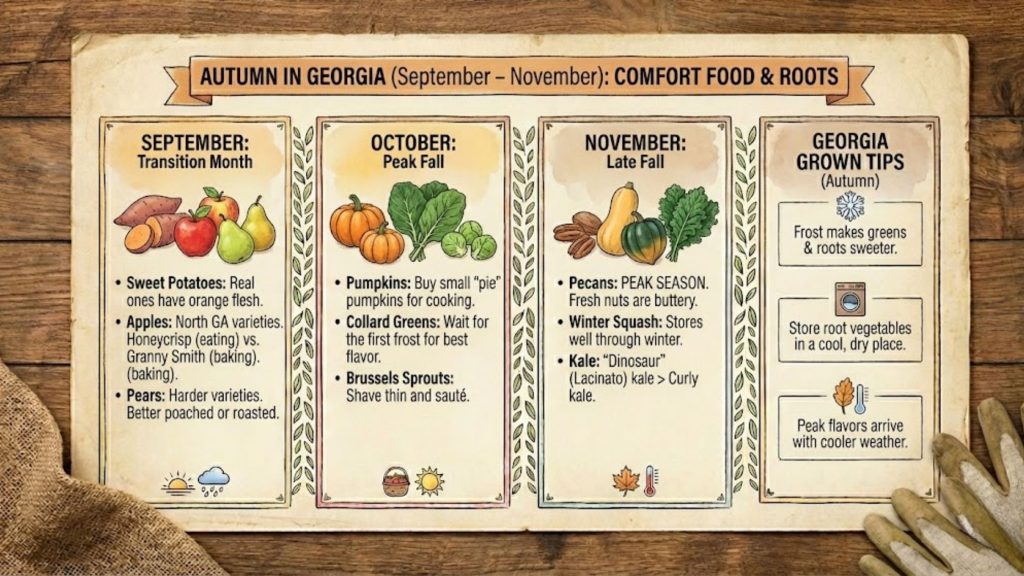
Fall brings cooler weather and a shift to root vegetables, apples, and greens. This is comfort food season.
September: Transition Month
Sweet Potatoes – Georgia sweet potato harvest starts in September. Real sweet potatoes have orange flesh; what’s often labeled “yams” in stores are actually sweet potatoes. True yams are a different plant that’s rarely sold in the US.
Apples – North Georgia apple season runs September through November. Different varieties ripen at different times. Granny Smith is good for baking (holds shape), Honeycrisp for eating fresh (crispy and sweet), Gala for balance.
Pears – Southern pear varieties like Kieffer ripen in fall. They’re often better cooked than raw—roasted or poached.
Winter Squash – Butternut, acorn, and other winter squashes start appearing. “Winter squash” doesn’t mean they grow in winter—it means they store well through winter.
Pecans (Early) – Early pecans start falling in September, but peak season is October and November.
October: Peak Fall
Pumpkins – Small pie pumpkins (also called sugar pumpkins) are what you want for cooking. The large carving pumpkins are watery and bland. Pie pumpkins have denser, sweeter flesh.
Collard Greens – Collards are a cool-weather crop. They’re available year-round in Georgia, but they taste best after the first frost—cold weather converts starches to sugars, making them sweeter and less bitter.
Brussels Sprouts – Fresh Brussels sprouts are firm and green. Shaving them thin and sautéing them quickly is completely different from boiling them whole, which is why many people think they hate Brussels sprouts.
Turnips & Rutabagas – Root vegetables that thrive in cool weather. Turnip greens are also edible and traditional in Southern cooking.
Persimmons – Fuyu persimmons (flat, can be eaten firm) and Hachiya persimmons (acorn-shaped, must be completely soft) ripen in fall. They’re different and not interchangeable—eating an unripe Hachiya is unpleasantly astringent.
November: Late Fall
Pecans (Peak Season) – Georgia is the second-largest pecan-producing state. Fresh pecans taste completely different from store-bought nuts that have been sitting for months. They should taste sweet and buttery, not bitter.
Cranberries – While not traditionally Southern, some Georgia farms now grow cranberries. They’re harvested in November, which is why they’re associated with Thanksgiving.
Kale – Like collards, kale improves with cold weather. “Dinosaur kale” (lacinato/Tuscan kale) has a better texture than curly kale for most applications.
Winter Squash (Peak) – All winter squash varieties are at their peak. Delicata squash has edible skin when roasted. Kabocha is sweeter than butternut.
Winter in Georgia (December – February)
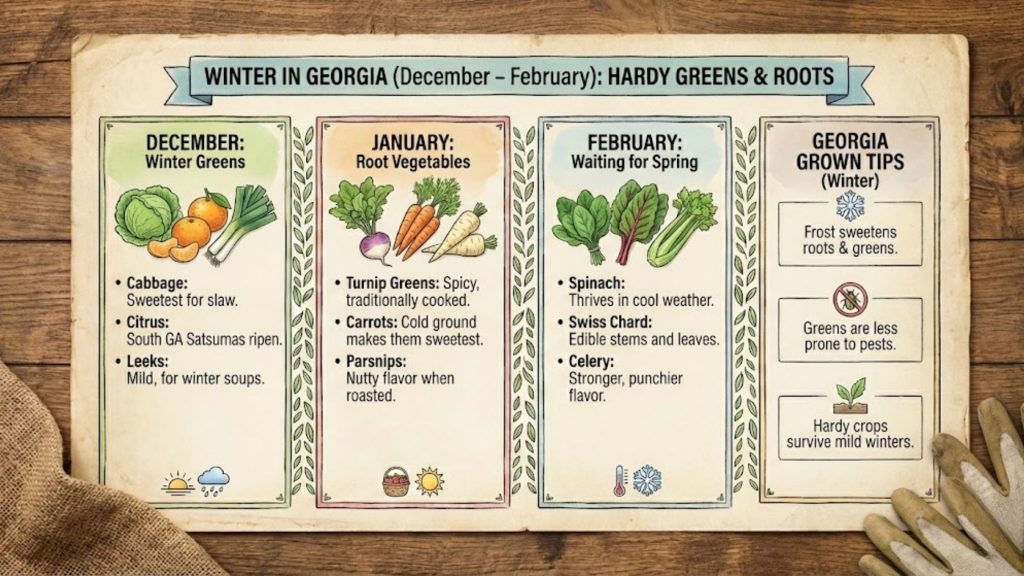
Georgia’s mild winters mean many crops continue producing. This is the season for hardy greens and root vegetables.
December: Winter Greens
Cabbage – Green, red, and Napa cabbage all thrive in cool weather. They’re less prone to pests in winter, so they’re often cheaper and better quality than summer cabbage.
Collard Greens – Traditional New Year’s Day food in the South (representing money/prosperity). They’re at their peak flavor after several frosts.
Cauliflower & Broccoli – Both are cool-weather crops that bolt in heat. Winter is when they’re sweetest.
Leeks – Leeks are cold-hardy and available through winter. They’re milder than onions and work well in soups and braises.
Citrus – While Georgia isn’t known for citrus, satsumas and other cold-hardy varieties grow in South Georgia. Peak season is December and January.
January: Root Vegetables
Turnip Greens – The greens are more traditional in Southern cooking than the roots, though both are edible. Turnip greens are spicier/more bitter than collards, which is why they’re often mixed.
Mustard Greens – Even spicier than turnip greens. They’re typically mixed with milder greens or cooked with pork fat to balance the bitterness.
Carrots – Cold weather makes carrots sweeter. The starches convert to sugars as a freeze-protection mechanism.
Beets – Like carrots, beets get sweeter in cold weather. Both red and golden varieties are available.
Parsnips – Underused root vegetable that looks like a white carrot. They’re sweet and nutty when roasted.
February: Waiting for Spring
Spinach – Baby spinach grows well in cool weather. It bolts quickly once temperatures warm up consistently.
Swiss Chard – Hardy green that produces through winter. The stems are edible and have a slightly different flavor than the leaves.
Celery – Fresh celery has a stronger flavor than you might expect if you’re used to bland grocery store celery that’s been sitting for weeks.
Early Strawberries (Late February) – South Georgia strawberry farms sometimes start as early as late February, though peak season is April.
How Atlanta Personal Chef Service Uses Seasonal Ingredients
We don’t build menus around what’s trendy or what a recipe calls for. We build them around what’s actually available and at its best right now in Georgia.
When strawberries are $3 a quart in April, strawberry dishes appear on menus. When tomatoes are abundant in July, you’re eating tomato-based dishes multiple times a week. When pecans are fresh in November, they show up in salads, crusting proteins, and desserts.
This isn’t about being precious about farm-to-table. It’s about basic economics and flavor. Better ingredients cost less and taste better when they’re in season locally.
Spring menus feature: asparagus, strawberries, snap peas, fresh herbs, new potatoes
Summer menus feature: tomatoes (constantly), peaches, corn, squash, peppers, watermelon
Fall menus feature: butternut squash, Brussels sprouts, sweet potatoes, apples, pecans
Winter menus feature: collards and other hardy greens, root vegetables, citrus, winter squash
Every menu is customized to your family’s preferences and dietary needs, but we prioritize ingredients that are at their peak because that’s when they taste best and cost less.
Practical Shopping Tips
Visit Farmers Markets: Atlanta has farmers markets throughout the metro area operating spring through fall. Produce is typically picked within 24-48 hours of being sold, which you can’t get at grocery stores.
Know What You’re Buying: Heirloom tomatoes should be irregular and fragile. Strawberries should smell sweet. Peaches should give slightly when pressed. If produce looks perfect and uniform, it’s been bred for shipping, not flavor.
Buy What’s Abundant: When everyone has squash or tomatoes or peaches, prices drop and quality peaks. That’s when to buy in bulk. But don’t buy too much – you’ll end up having fruits and veggies spoil – this can be a waste and will also require extra kitchen cleanup!
Understand Storage: Some produce (tomatoes, peaches, stone fruit) should never be refrigerated before they’re ripe. Others (berries, greens, herbs) should be refrigerated immediately. Knowing the difference extends shelf life significantly.
Ask Questions: Farmers market vendors know when their produce was picked, how to store it, and how to cook it. They’re a resource.
Why Most People Don’t Cook This Way
Cooking seasonally requires flexibility. You can’t decide in January that you want tomato salad – you have to wait until July. You can’t follow the same recipes year-round because ingredients aren’t available year-round.
That’s where we come in.
We plan menus around what’s available now. We shop for peak-season ingredients. We cook everything in your home or deliver it fresh. You eat better food without having to think about it.
Starting at $400/week, we provide 4-6 meals that change with the seasons. Not because it’s trendy, but because it produces better food for less money.
What This Actually Means for Your Family
You’re not going to think about whether strawberries are in season when you want a salad. You’re not tracking when butternut squash is at its peak.
But we are.
That’s the service. Chefs who know Atlanta’s food scene, know what’s growing when, and build menus around that. You get restaurant-quality food at home that’s built around the best ingredients available right now.
We’ve been doing this in Atlanta since 2012. We serve families from Alpharetta to Peachtree City, Brookhaven to Fayetteville. We know where to source ingredients and how to cook them.
If you’re eating takeout multiple nights a week, or cooking the same five dinners on repeat, or you just want to know what fresh food actually tastes like, we should talk.
Ready for Actual Seasonal Cooking?
Call us: (404) 913-4633
Email: info@atlchefs.com
Visit: www.atlantapersonalchefservice.com
Free consultation. We’ll talk about what your family eats, what you’re trying to avoid, and whether this makes sense for you.
No contracts. No commitments. Just good food made with ingredients that are actually in season.
Because there’s a reason your grandmother’s tomato sandwich tastes better in July.
About Atlanta Personal Chef Service
Since 2012, we’ve provided personal chef services to families throughout Metro Atlanta. Our chefs are culinary-trained professionals who build menus around seasonal ingredients. We shop local when it makes sense, cook seasonal because it tastes better, and make food that doesn’t require explanation. Serving Alpharetta, Brookhaven, Buckhead, Decatur, Dunwoody, Fayetteville, Midtown, Peachtree City, and surrounding areas.